Price is the quiet hinge that decides whether a new technology becomes a toy for the wealthy or a habit for everyone else.
The personal computer, the cell phone, the flat-screen television, each one sat behind glass in a showroom until the number on the tag dropped far enough that an ordinary shopper stopped doing math and simply bought one. The hardware barely changes in that moment. The price changes, and that shift is what turns a curiosity into a fixture.
Smart glasses have been stuck on the wrong side of that line for most of the past decade. They have been clever, sometimes useful, and almost always expensive enough to feel like a gamble rather than a purchase.
Meta built the one breakout hit the category has produced, the camera-equipped Ray-Ban line, yet even that success leaned on novelty more than need. All the while, the bill for the artificial intelligence (AI) running behind those frames kept climbing into numbers large enough to make Wall Street flinch.
On June 23, the company moved the line. Meta (META) launched a new in-house range called Meta Glasses, with a starting price of $299, at least $80 under its entry-level Ray-Ban Meta pair, according to CNBC.
How smart glasses became Meta’s biggest hardware win
For years, Meta’s hardware story was a virtual reality story, the bet that prompted the 2021 name change from Facebook to Meta. That wager mostly stalled, with VR headsets still a niche product aimed at gamers, according to CNBC. The glasses are the part that quietly worked.
The numbers behind the win are real. Meta and EssilorLuxottica (ESLOY) hold more than 80% of the AI glasses market, according to research firm Counterpoint Research.
Related: Apple is coming for the entire $200 billion glasses market
In a separate count using a narrower definition, IDC pegged Meta at 69.2% and said shipments of displayless smart glasses surged 167% in the first quarter of 2026 from a year earlier, according to CNN. Zuckerberg told investors on an April earnings call that daily glasses users had tripled year-over-year.
Meta frames the category as the center of its hardware future, calling glasses “the most exciting hardware category of the AI era,” according to Meta. That language carries weight because the company has tied its identity to it.
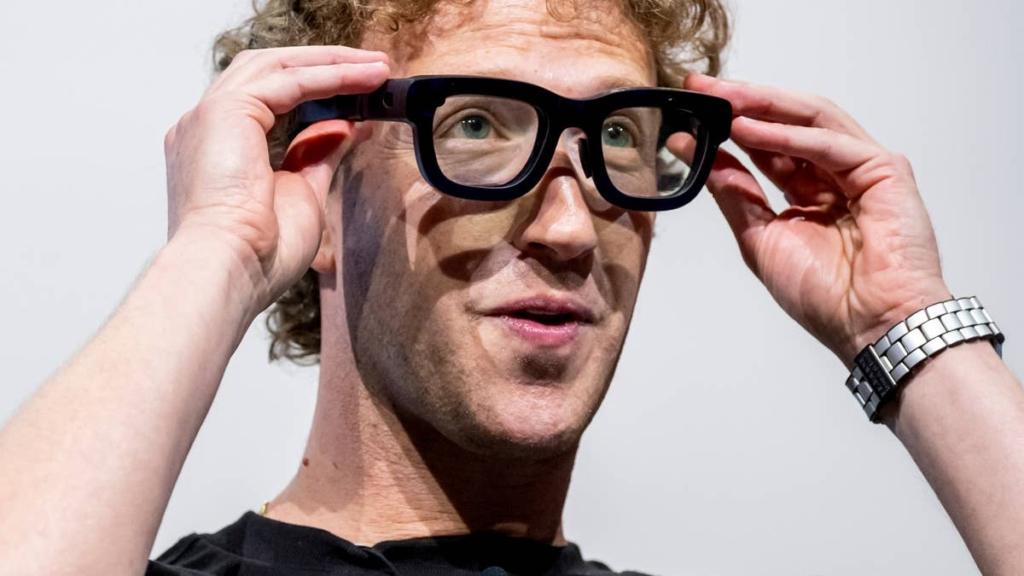
Bloomberg / Getty Images
What the new $299 Meta Glasses actually change
The real change is the number, not the hardware. Meta Glasses start at $299, at least $80 under the second-generation Ray-Ban Meta pair, and they are the first Meta frames sold without Ray-Ban or Oakley branding, according to CNBC. EssilorLuxottica still builds them, but the design came from inside Meta.
The strategy is reach. “You really want to be able to be in many places in the market,” Meta chief technology officer Andrew Bosworth said at a June 22 press event, according to CNN. Lower prices put the glasses on more faces, and more faces are what Meta needs to prove its AI spending produces something people actually use.
More Tech Stock:
- Veteran Wall Street trader sharply raises SanDisk stock price target
- Oracle stock analyst reboots outlook as costs spark debate
- Bank of America resets Apple stock forecast after Siri Al shift
The line comes in three frame styles, named Adventurer, Fury, and a slim oval built with Kylie Jenner, according to Meta. The Jenner model, priced at $399, even lets wearers swap the standard Meta AI voice for an AI-generated version of her own, according to MacRumors. The frames also add live translation in 14 new languages and a dedicated button to summon Meta AI.
When I lined the prices up against the rest of Meta’s lineup, the logic got clearer. The Oakley Meta pair starts at $499, and last year’s Ray-Ban Display, with a screen built into the lens, ran about $800, according to CNBC.
At $299, the new frames are the on-ramp, not the flagship.
Where the smart glasses price war goes next
Meta is not running this race alone anymore. Google (GOOGL) is building computerized eyewear with Warby Parker (WRBY) that runs on its Gemini AI model, and is working with Samsung on Android XR glasses due this fall, according to CNBC.
Snap (SNAP) launched its $2,195 Specs on June 16, and Apple (AAPL) is reportedly planning glasses of its own, according to CNBC.
Here is how the price ladder stacks up across the field today:
- Meta Glasses start at $299, at least $80 below the second-generation Ray-Ban Meta pair, according to CNBC.
- The Oakley Meta glasses start at $499, while last year’s Ray-Ban Display, with a screen in the lens, ran about $800, according to CNBC.
- Snap’s Specs, a full augmented-reality computer for the face, launched June 16 at $2,195, according to Reuters.
- The average price of smart glasses is expected to fall from $376 this year to $229 by 2030, according to research firm IDC, as reported by CNN.
Price is only half the battle. The other half is whose assistant people trust enough to talk to all day. Some 44% of American adults use ChatGPT and 24% use Gemini, while just 14% use Meta AI, according to Pew Research. T
hat gap is the soft spot rivals will press, and it is the reason Snap and Google both think they can take a category Meta built, a fight I covered in my TheStreet report.
What a cheaper bet means for your money
Step back and the $299 tag reads less like a product decision and more like a financial one. Meta has guided to as much as $145 billion in capital spending this year, nearly double the roughly $72 billion it spent in 2025, according to Fortune. The stock has not loved that math, sliding about 14% so far in 2026, according to Yahoo Finance.
What strikes me about the $299 number is what it admits. A company spending like Meta does not cut its entry price for fun. It cuts the price because volume is now the goal, and because a wearable nobody buys cannot return a dollar of that AI bill.
For your own portfolio, the signal matters more than the gadget. Cheaper hardware is how a niche becomes a market, and IDC expects average glasses prices to keep falling toward $229 by 2030.
If Meta can turn $299 frames into a daily habit the way Apple turned the wrist into a watch, the spending story changes from a worry into a moat.
The phone has owned your pocket for almost 20 years. Meta is betting the next computer sits on your face, and at $299, it has finally made that bet cheap enough for the rest of us to call.
Related: A Chinese startup just beat Apple and Meta to coding glasses